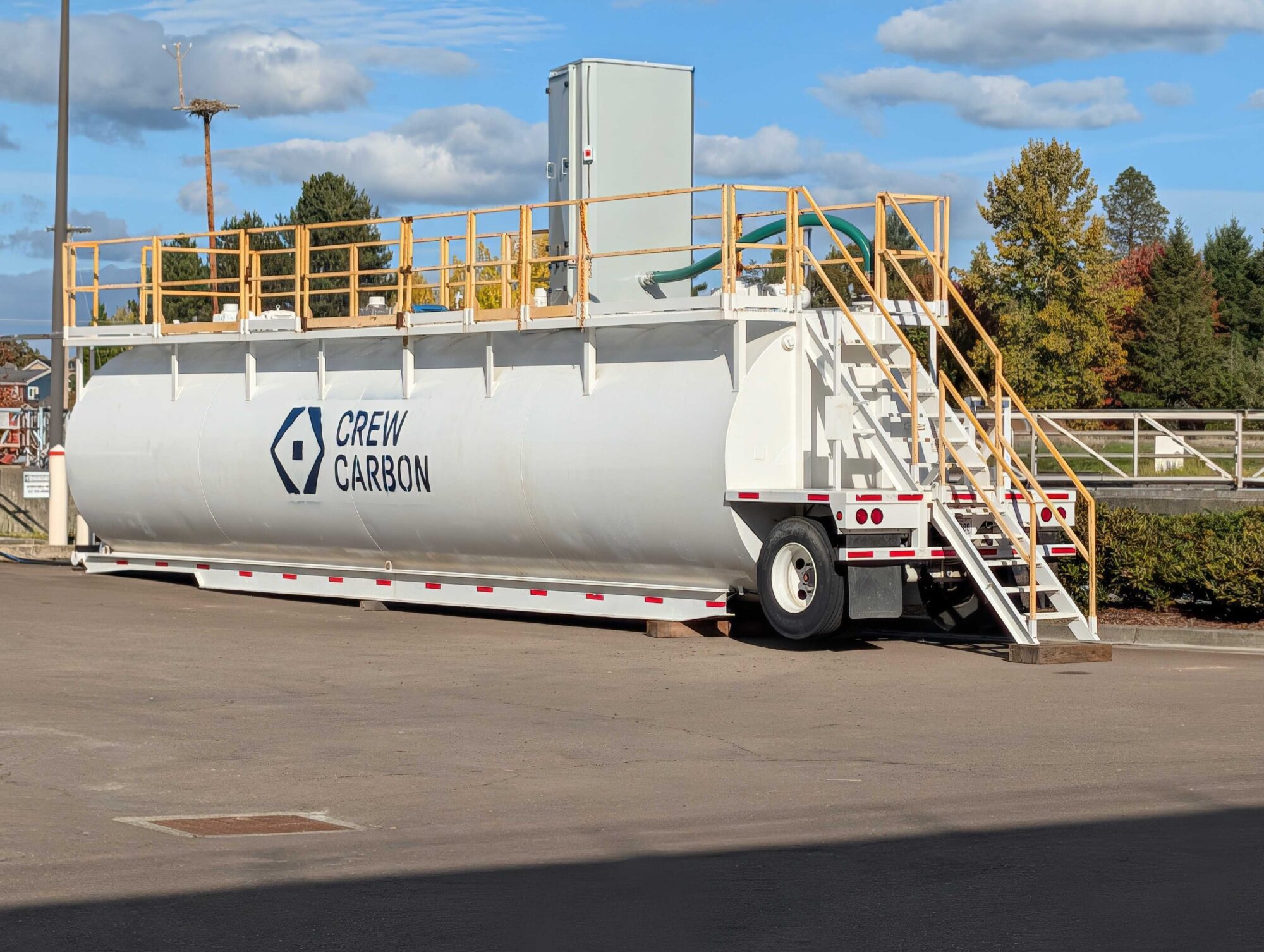
Written by Elisabeth Feldstein - AP Ventures
Carbon dioxide removal (CDR) is a critical pillar of all net-zero pathways. As climate commitments move from ambition to action, the need for high-quality, scalable CDR solutions is urgent. Yet engineered approaches remain costly and slow to deploy while many nature-based solutions struggle with verifiability and quality.
A promising and scalable opportunity lies within the existing systems that treat the water flowing through our communities.
Climate tech company CREW has developed a technology that addresses growing pressures such as increased wastewater, tighter regulations, and aging infrastructure. CREW’s solution helps utilities improve treatment performance, reduce both opex and capex, and expand the capacity of existing wastewater plants. CREW’s ability to solve operational problems for utilities is among the strong commercial drivers in the CDR category.
A solution that fits the sector
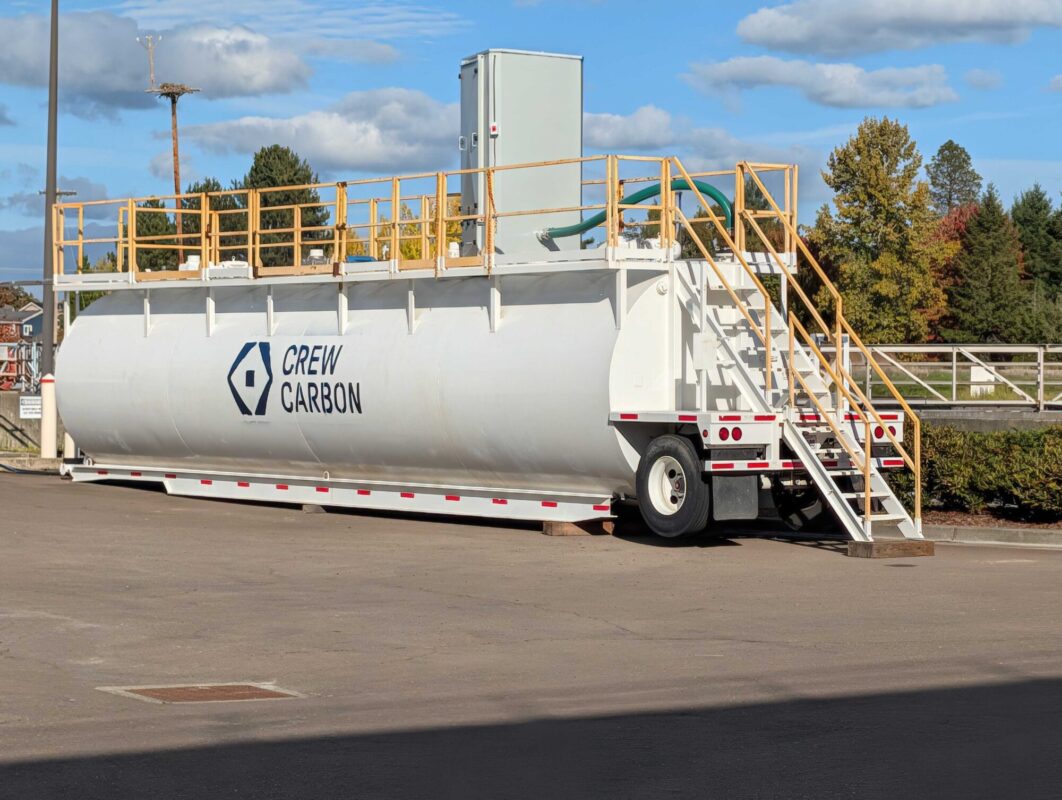
Wastewater treatment is one of the few industrial sectors where carbon removal can scale rapidly using infrastructure that already exists in every major city and community. CREW integrates directly into existing treatment facilities replacing conventional treatment chemicals with abundant and locally sourced minerals like calcium carbonate (also known as limestone) to improve plant performance while permanently removing CO2. This simple yet elegant substitution helps wastewater treatment facilities realise major operational and capital savings alongside durable carbon removal at scale. This combination matters because the CDR market is undergoing a structural shift. Solutions that reduce cost and improve performance in addition to removing carbon have become much easier and faster for customers to adopt. CREW's technology is exactly that: it tackles operational challenges and climate impact in tandem. The result has been rapid growth, strong commercial traction, and notably short adoption cycles in a sector known for moving slowly.
The CDR market context
By 2050, the CDR market is projected to reach USD 250 billion - 1 trillion, corresponding to roughly 10 gigatonnes of CO2 removal per year. Key trends like the growth of AI are increasing technology companies’ energy use at a pace that outstrips the deployment of clean power, leaving them with limited options for decarbonisation. As a result, high-quality carbon dioxide removal is becoming essential to close the gap between rising emissions and available clean energy solutions.
Within the voluntary carbon markets, buyers are simultaneously tightening standards and placing increasing value on additionality, verifiability, permanence, and delivery when procuring removal credits. Historically, engineered solutions commanded premium pricing due to strong measurability and verifiability. Meanwhile, nature-based solutions once viewed as low cost but high risk have significantly improved the integrity of their monitoring, reporting, and verification (MRV) systems. As a result, pricing expectations across both categories are beginning to converge as buyers’ willingness to pay declines. At the same time, the supply of verifiable, immediately available carbon removal remains limited. This supply-demand gap creates a meaningful opportunity for companies, like CREW, capable of delivering real, measurable tonnes today to gain a significant advantage and establish leadership in the CDR market.
The right team and tech
A Yale spinout, CREW fits into AP Ventures’ strategy of backing teams and technologies that will deliver decarbonisation at scale through differentiated approaches and strong commercial traction.
With its unique positioning at the intersection of essential infrastructure and climate technology, CREW is poised to become a category-defining leader in carbon removal.
References:
Carbon Dioxide Removal, IPCC (2023). https://www.ipcc.ch/report/ar6/wg3/downloads/outreach/IPCC_AR6_WGIII_Factsheet_CDR.pdf
Carbon Offset Market Could Reach $1 Trillion With Right Rules, BNEF (2023). https://about.bnef.com/insights/finance/carbon-offset-market-could-reach-1-trillion-with-right-rules/
Where the Carbon Offset Market Is Poised to Surge, Morgan Stanley (2023). https://www.morganstanley.com/ideas/carbon-offset-market-growth
Maeve Allsup, Microsoft energy lead: CDR may be a backstop for corporate net zero targets, Latitude Media (2025). https://www.latitudemedia.com/news/microsofts-energy-lead-carbon-removal-may-be-a-backstop-for-corporate-net-zero-targets/
Keep Calm and Remove on, CDR.fyi 2024; Year in Review, CDR.fyi (2025). https://www.cdr.fyi/blog/2024-year-in-review
M, Peter., Parry, E., Scott, J. et al. Carbon removals: How to scale a new gigaton industry, McKinsey (2023). https://www.mckinsey.com/capabilities/sustainability/our-insights/carbon-removals-how-to-scale-a-new-gigaton-industry
Multi-Gigaton Scale Carbon Dioxide Removal Is Needed to Achieve Net Zero, but Is unlikely to Materialize Without Policy Drivers, BCG (2024). https://www.bcg.com/press/24june2024-multi-gigaton-scale-carbon-dioxide-removal-is-needed